
Plenary lectures
Plenary lecture 1
Topic :
Dental Materials.
Title :
Advances in Dental Materials—What’s New in Paediatric Dentistry.
Speaker :
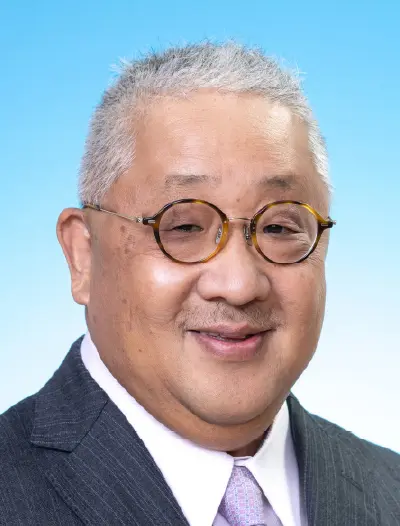
Prof. Satoshi Imazato
101st President of the International Association for Dental, Oral, and Craniofacial Research (IADR) Professor, Graduate School of Dentistry, The University of Osaka, Japan
Current commercially available dental materials provide favorable clinical performance. Furthermore, advanced materials which exhibit bio-active functions have been introduced to the market recently. Among them, several materials useful for treatment and care in paediatric dentistry can be found;
1. Fissure sealant or coating resin containing bio-active filler which releases multiple ions are useful for prevention and management of caries. Their superior effects have been proven by clinical study.
2. Resin infiltration technique is known to be effective for treating hypomineralization. A new adhesive containing no water is a promising material for infiltration treatment since it has strong mechanical properties by utilization of new resin monomers. This adhesive is also advantageous because it can be applied with prior etching with phosphoric acid.
3. Resin composites which show opaque color and fit for filling of deciduous teeth are available. We have also developed experimental CAD/CAM resin composites with appropriate strength for deciduous teeth. The crown made from this CAD/CAM block shows proper wear resistance and can be bonded with glass-ionomer cements.
On the other hand, we have been conducting research to develop “smart” bio-active materials such as caries risk-responsive coatings/restoratives designed to actively prevent or manage tooth decay by reacting to the pH conditions of biofilm.
In this presentation, information on recently available several innovative commercial materials useful for paediatiric dentistry will be shared. In addition, our approach to develop “smart” bio-active materials as the future dental materials will be addressed.
Plenary lecture 2
Topic :
Orthodontic Management.
Title :
Two Experts, One Vision
Why the Narrow Maxilla Matters for Growing Children
Speaker :
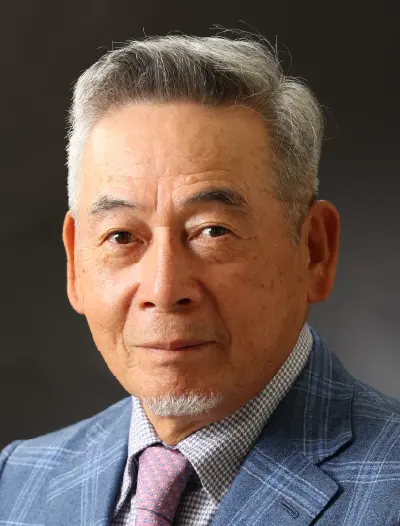
Dr. Ryuzo Kanomi
Director, Kanomi Orthodontic Office, Japan
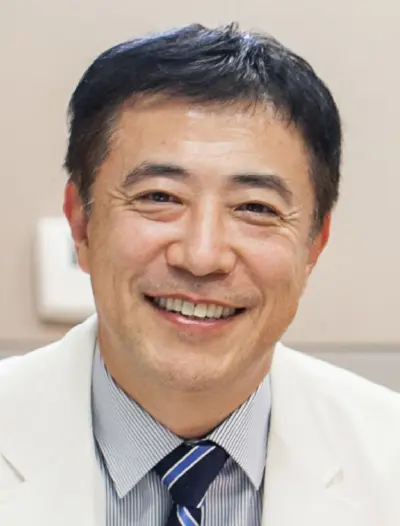
Prof. Kitae Park
Professor Emeritus, Samsung Medical Center, School of Medicine Sungkyunkwan University, Korea
A narrow maxilla in a growing child should be viewed not simply as a dental arch problem, but as an orthopedic and functional problem that may influence craniofacial growth, tooth eruption, occlusal development, and airway function. Early orthodontic treatment therefore has the potential to promote normal growth across the entire maxillofacial region.
This joint lecture will present a growth-oriented approach based on the early recognition and management of maxillary constriction. Particular attention will be given to the orthopedic effects of rapid maxillary expansion (RME), and how these may differ from those of slow maxillary expansion.
Clinical and CBCT findings will illustrate changes in the jaw and alveolar bones, as well as tooth inclination associated with maxillary expansion, and explain their clinical implications.
Another important focus will be prevention. Early correction of maxillary constriction may help prevent the unnecessary closure of gubernaculum canals and maintain a proper eruption path for maxillary canines, thereby reducing the risk of impaction. The relationship between maxillary constriction and Class II malocclusion, as well as its implications for early management, will also be discussed.
Finally, oral function should be considered an essential part of treatment during the growth period. Mouth breathing and associated functional problems may contribute to unfavorable craniofacial development and malocclusion. By integrating orthopedic correction with careful evaluation of tooth eruption, breathing, and oral function, early orthodontic treatment may provide benefits beyond correction of the dental arches and contribute to healthier craniofacial development.
Plenary lecture 3
Topic :
AI in Pediatric Dental Office.
Title :
Documentation, Diagnosis, and Workflow in Pediatric Dental Practices
— Is Artificial Intelligence Our New Best Friend?
Speaker :
Prof. Sergio Uribe
Associate Professor, Riga Stradins University, Latvia
Is artificial intelligence ready for paediatric dentistry? Are paediatric dentists ready for AI?
Every paediatric dentist now faces the same question: which AI tools deserve trust, and which deserve scepticism. Artificial intelligence will impact many areas of dentistry, but paediatric practice remains a special case, where empathy and behaviour management stay in the domain of human clinicians.
In this lecture, we will discuss the applications in administration, treatment planning, diagnosis and prognosis and evidence supporting these areas, what to look for in research to identify valid and reliable studies, and what the future brings with multimodal generative AI and AI agents.
We will also discuss the keys to ensure your clinic is ready for safe AI implementation, including the data requirements behind it.
Plenary lecture 4
Topic :
Prevention of Dental Caries.
Title :
We Know How to Prevent ECC. So Why Aren't We?
Speaker :
Prof. Marcelo Bönecker
Professor, School of Dentistry, University of São Paulo, Brazil
Prof. Vineet Dhar
Assistant Dean, University of Maryland School of Dentistry, USA
Early childhood caries (ECC) remains highly prevalent despite strong scientific evidence on its prevention. While controlling sugar intake and using fluoride are essential, preventive interventions alone have not been sufficient to reduce the burden of ECC.
This lecture will discuss the need to move beyond traditional clinical approaches and adopt a broader, transdisciplinary perspective that considers the social determinants of health. Strategies such as promoting oral health from the first 450 days of life, improving caregivers’ oral health literacy, creating supportive environments, and implementing upstream actions will be explored.
Preventing ECC requires not only educating and treating children, but also addressing the conditions that place them at risk.